Showing posts with label weather. Show all posts

Friday, September 25, 2026

Heat governance workshop invitation

Calling all heat governance experts: A Dutch–U.S. Dialogue on Governance Capacity for Extreme Heat | Workshop 4 November, 2026 | register here https://lnkd.in/ee_3Nwk7
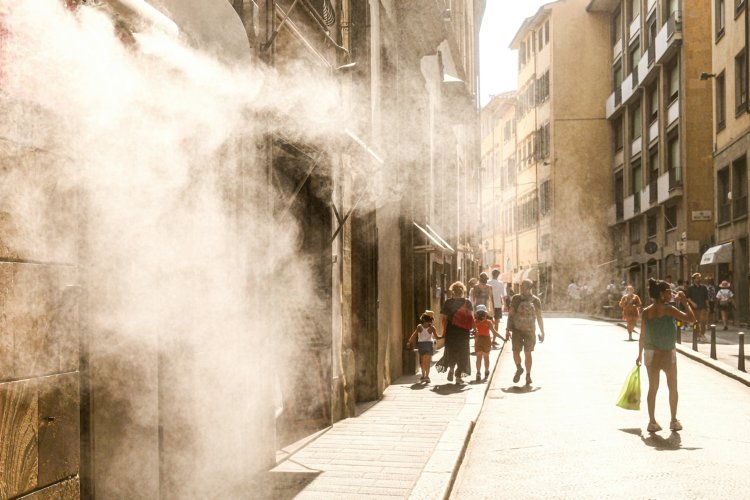
Heat in urban area 

That's right, we are 1 out of 5 projects awarded by the 4TU funds for small proposals. Read our summary below and find the others here https://lnkd.in/eN6FJi8c

 
A Dutch–U.S. Dialogue on Governance Capacity for Extreme Heat – Workshop 4 November
Lead applicant: Sean Vrielink, University of Twente (UT), and Namkyung Oh, Auburn University. Co-applicant: Srijith Balakrishnan, TU Delft.
Local governments in both the Netherlands and the United States face a rapidly growing challenge: building governance capacity for extreme heat, a hazard with low institutional maturity compared to flooding. The core objective is to identify which governance-capacity factors most influence local ability to assess heat vulnerability and implement adaptation measures. This will be achieved through a structured Dutch–U.S. workshop bringing together stakeholders from both countries to share insights and best practices. Three researchers from Auburn University are visiting the Netherlands, and you are invited to join them at this workshop.
The workshop will take place at the University of Twente on Wednesday 4 November, the day after the UT Climate Event.

Friday, January 30, 2026

Thermal walks in Hengelo - winter walks results

For our BSc module Smart solutions for sustainable cities two groups of students performed two separate thermal walks this winter in the same locations as our previous students did last summer. On the first day in December it was still quite warm with afternoon temperatures reaching up to 15 degrees Celsius, whereas the second day was right after heavy snowfall had cleared on 13 January. While it was colder with 9 degrees Celsius, people experienced the day as relatively comfortable, but this could be due to it being less cold than the days before.

The most important conclusions were that thermal walks were possible and relevant in winter. There should be a higher emphasis on the perceived temperatures as this proved to be more unrelated to external factors than in summer. Also, while in summer temperature and solar radiation were the main weather factors affecting comfort, in winter wind and humidity/precipitation were much more influential. Other differences are found in the table below.

Only denser vegetation had some impact on reducing wind speed, and most urban green infrastructure was too sparse to impact this. However, denser green infrastructure could block more solar radiation and thereby reduce thermal comfort. A balance between these two factors needs to be found when UGI is designed, not just for summer, but for year round thermal comfort. 


Friday, September 5, 2025

Heat symposium July - report

The heat symposium in Amsterdam in July showcased current research and solutions to combat urban heat stress. We have many policies and information available to help combat heat, with the most important being the national heat plan. However, it is not always implemented everywhere yet. If we can reduce heat stress, we can also help reduce night heat stress when buildings do not cool down sufficiently and people suffer from lack of sleep, loss of productivity and concentration, stress, and in the worst cases death. The link to socio-economic status is also clearly mapped, and we see worse conditions in areas with lower socio-economic status (in Dutch: armste wijken zijn de warmste wijken). The question has moved to what can be done as implementable measures, as we know where help is needed most. This event highlighted both green infrastructure measures, and cases where GI was not possible. 

There are new designs for mobile greenery. While these may not be ideal for plants to exist, they have proven to be effective to reduce experienced temperatures. WUR also showed different design options and how larger trees once again provide larger benefits in terms of shade, water retention, and biodiversity.


Thermal walk research showed that 10% more greenery led to about 0.5 degrees Celsius cooling, and the experienced temperature in shaded areas is about 10-17 degrees Celsius less, meaning greenery can make a big difference.

Still, many inner city buildings are several floors high and thus out of range of most trees. GI cannot solve everything in these cases. Issues mentioned included:

  • Inhabitants who rent properties and have limited options to alter their living space
  • Regulations prohibiting outside awnings or even the possibility of opening windows
  • Housing corporations pointing towards the lack of heat stress data and therefore no reason for action
  • People cannot sleep in their bedrooms with 29 degrees Celsius and move to the kitchen or hallway 

This called for additional measurements within these high rise buildings. After measurements and interviews it was found that: 

  • Rental housing is 1-2 degrees Celsius warmer than privately owned housing
  • Measures outside windows are exponentially more effective than inside
  • Heat labels can help implement appropriate measures

Aside from technical measures, there was also a clear call to be a humane citizen and check on your neighbours during a heatwave, especially if they are older adults or have a disability. A clear actionable point!


Friday, March 14, 2025

Solar appreciation day

The second Friday of March is national solar appreciation day, at least in the USA. There's several ideas on how to spend the day and also appreciate solar power. Here are some ideas from the sustainable digital infrastructure alliance, some facts from the US department of Energy, and both ideas and facts from freedom solar power. 

Did you know that solar power can provide 2850 times the global energy needs? (source) Compared to other types of renewables, solar is the most prevalent, even though it is intermittent.


This is one of the reasons we are happy to be able to use solar powered sensors in the LILa green infrastructure project on the outside of the building. 

Sustainability day and week

While 10 October is our national sustainability day, this year it falls on a Saturday. The entire week after is Sustainability Week at the ...