Showing posts with label disaster preparedness. Show all posts

Friday, September 25, 2026

Heat governance workshop invitation

Calling all heat governance experts: A Dutch–U.S. Dialogue on Governance Capacity for Extreme Heat | Workshop 4 November, 2026 | register here https://lnkd.in/ee_3Nwk7
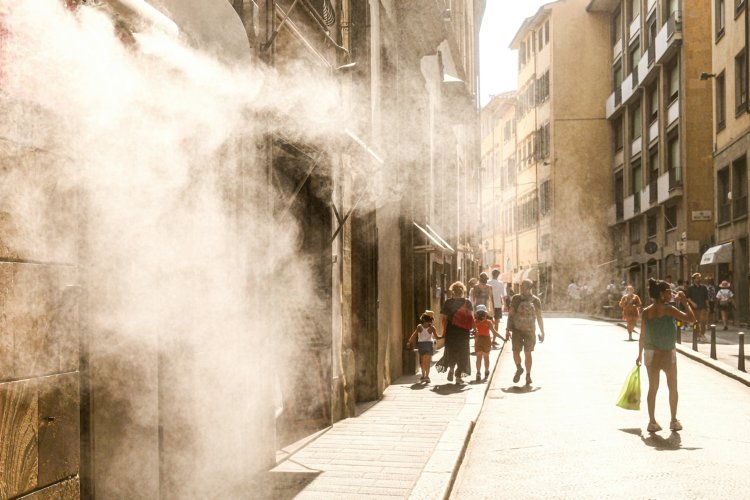
Heat in urban area 

That's right, we are 1 out of 5 projects awarded by the 4TU funds for small proposals. Read our summary below and find the others here https://lnkd.in/eN6FJi8c

 
A Dutch–U.S. Dialogue on Governance Capacity for Extreme Heat – Workshop 4 November
Lead applicant: Sean Vrielink, University of Twente (UT), and Namkyung Oh, Auburn University. Co-applicant: Srijith Balakrishnan, TU Delft.
Local governments in both the Netherlands and the United States face a rapidly growing challenge: building governance capacity for extreme heat, a hazard with low institutional maturity compared to flooding. The core objective is to identify which governance-capacity factors most influence local ability to assess heat vulnerability and implement adaptation measures. This will be achieved through a structured Dutch–U.S. workshop bringing together stakeholders from both countries to share insights and best practices. Three researchers from Auburn University are visiting the Netherlands, and you are invited to join them at this workshop.
The workshop will take place at the University of Twente on Wednesday 4 November, the day after the UT Climate Event.

Thursday, September 3, 2026

Student research results - vulnerability to flooding by extreme precipitation in Enschede

One of our BSc students recently graduated on this topic with a Dutch thesis by among others conducting interviews with various stakeholders, including municipality Enschede, waterboard Vechtstromen, Safety Region Utrecht, social worker of the waterlogged area Pathmos, and housing coorporation. To guarantee their annonimity, these interviews are not publicly plublished. The results however did show some interesting points. The main point was to find out if social factors are also taken into account when determining flood vulnerability, and not just construction or physical environment factors. Unsurprisingly, there is still some development possible there, as most stakeholders are not yet too familiar with social factors. The English abstract is below. 

"Abstract

One of the effects of climate change is that extreme weather events are expected to happen more
frequently. These heavy rainfall events are a risk to safety since they can result in floods. In July 2024,
floods occurred in the Pathmos neighborhood due to heavy rainfall. The “Onderzoeksraad voor
Veiligheid,” a Dutch research institute, published a report about this flood. One of its conclusions
was that the influence of social and constructional factors on the vulnerability to floods caused by
heavy rainfall was largely ignored in the current climate policy. As a result, it is unclear what factors
should be considered while determining the vulnerability to floods caused by heavy rainfall.
Therefore, a methodology is developed to identify and analyze the social and constructional factors
that influence vulnerability.
This research shows that the location has the most impact on the vulnerability to these floods.
Besides the location, the average age and diameter of the sewage influence vulnerability
significantly, together with the built environment, height of the doorstep, presence of installations
on/below ground level, and people with special needs. Also, the quality of the buildings, the
presence of social networks, and the socioeconomic status matter.
This shows that besides the location, social and constructional factors also influence the
vulnerability to floods caused by heavy rainfall. These results can be used as an addition to the
current policy on climate adaptation. Together with the current policy, which is mostly driven by the
physical characteristics of the flood, more precise decisions can be made on where to add climateadaptive
measures. Therefore, this research can help identify the most vulnerable areas within
Enschede. "

Monday, June 1, 2026

Heat Action Day


June 2 is Heat Action Day in the Netherlands. As per the organizing website: 

"On this day, we are joining forces across the Netherlands and internationally to raise awareness of the serious risks posed by heat. Why is Heat Action Day necessary? Heat is the most urgent and deadly climate risk facing the Netherlands. Heat waves are becoming more frequent and lasting longer. Older adults, young children, and people with underlying health conditions are at the greatest risk. 

Heat isn’t just a problem in our cities—people in urbanized neighborhoods in smaller municipalities also suffer from the heat. More than half of all Dutch people live in homes that are at risk of overheating in the summer. Heat doesn’t have to become a major problem. Fortunately, many heat mitigation measures are relatively simple, and a lot is already being done: municipalities, provinces, housing authorities, health organizations, and research institutions are working hard on solutions. But more is needed. That is why Heat Action Day is the annual occasion to come together and reflect on the importance of addressing heat stress. On this day, organizations highlight their heat-related initiatives and raise “hot topics.”"

Can't find anything nearby? Join the online webinar on how to keep cool indoors in your house, or another about designing outdoor spaces. You can also check out the newly developed tool by the Dutch meteorological agency that shows the heat strength on an app, based on the Wet Bulb Globe Temperature.
 

Friday, May 8, 2026

Climate Exam

The UT is one of the many organizations hosting the Climate Exam between 8 and 29 May. You can join on Thursday 21 May at the Spiegel building after registering, as there is a limited number of 45 places. No time? No problem! You can take a short version online too. It's available in Dutch and English and allows you to get up to date with the state of our climate. I scored 80%, thinking that the melting of glaciers was already more advanced thanks to the exposition in Vienna I saw previously. 


Thursday, September 18, 2025

GI example: wadi and playground in Wierden

In the North of the town Wierden is a nature playground. Although it has been added into the neighborhood's edges as a developmental afterthought, it still performs well as a multifunctional space. 


The reason the space was still available for use lies in the power poles. We have seen the same in Enschede on a larger scale previously. In the Netherlands special guidelines prohibit building near power poles due to obviously the height of structures interfering with the lines themselves, and because it is potentially causing a slightly higher chance of cancer when you live too close. It is still suitable for the combination of playground and temporary water storage, under the assumption that children won't go play in flooded playgorunds.  


Some parts of the area have elevated paths and concrete tubes run underneath to connect the different wadi storage areas. Municipality Wierden is one of few who include an explanation of how wadi's are supposed to function on their website, including a video with English closed captions (from Enschede).


Friday, September 5, 2025

Heat symposium July - report

The heat symposium in Amsterdam in July showcased current research and solutions to combat urban heat stress. We have many policies and information available to help combat heat, with the most important being the national heat plan. However, it is not always implemented everywhere yet. If we can reduce heat stress, we can also help reduce night heat stress when buildings do not cool down sufficiently and people suffer from lack of sleep, loss of productivity and concentration, stress, and in the worst cases death. The link to socio-economic status is also clearly mapped, and we see worse conditions in areas with lower socio-economic status (in Dutch: armste wijken zijn de warmste wijken). The question has moved to what can be done as implementable measures, as we know where help is needed most. This event highlighted both green infrastructure measures, and cases where GI was not possible. 

There are new designs for mobile greenery. While these may not be ideal for plants to exist, they have proven to be effective to reduce experienced temperatures. WUR also showed different design options and how larger trees once again provide larger benefits in terms of shade, water retention, and biodiversity.


Thermal walk research showed that 10% more greenery led to about 0.5 degrees Celsius cooling, and the experienced temperature in shaded areas is about 10-17 degrees Celsius less, meaning greenery can make a big difference.

Still, many inner city buildings are several floors high and thus out of range of most trees. GI cannot solve everything in these cases. Issues mentioned included:

  • Inhabitants who rent properties and have limited options to alter their living space
  • Regulations prohibiting outside awnings or even the possibility of opening windows
  • Housing corporations pointing towards the lack of heat stress data and therefore no reason for action
  • People cannot sleep in their bedrooms with 29 degrees Celsius and move to the kitchen or hallway 

This called for additional measurements within these high rise buildings. After measurements and interviews it was found that: 

  • Rental housing is 1-2 degrees Celsius warmer than privately owned housing
  • Measures outside windows are exponentially more effective than inside
  • Heat labels can help implement appropriate measures

Aside from technical measures, there was also a clear call to be a humane citizen and check on your neighbours during a heatwave, especially if they are older adults or have a disability. A clear actionable point!


Thursday, August 7, 2025

Student research results - modeling urban climate adaptation measures

Our civil engineering student Sacha Geertman finished her BSc thesis on the topic of 'Climate adaptive outdoor space measures dealing with waterlogging'. She modeled the impacts of 8 different measures for the same urban area, showing widely varying results when it comes to total water storage vs. time before streets are accessible. The next future step is to look at the impacts of combining measures for optimum disaster prevention. The abstract is below, and the repository link to download the full thesis is here. 


 Abstract

With ongoing climate change, urban areas in the Netherlands increasingly face extreme precipitation events that cause waterlogging. To mitigate these impacts, municipalities must implement adaptation measures. This research aims to identify the most suitable measures for Dutch urban areas to mitigate the impacts of extreme precipitation. D-Hydro, a simulation model, was used to assess the performance of the measures for a case study in Duiven for an 80mm/hr rainfall event. First, a literature study and expert consultation provided an overview of existing adaption measures, their benefits and limitations. Secondly, assessment criteria and modelling methods were determined through literature and expert consultations. Thirdly, seven measures were simulated for the case study: de-paving, ditches, infiltration crates, green roofs, permeable paving, sewer improvement and wadis. These were evaluated based on: water depth on the road, time until roads are accessible, total infiltration, water flow towards the nearby neighbourhood, water level rise in the nearby waterway, costs and space. Results showed that wadis performed best overall, but require a high investment and a large area. Ditches also performed well on most criteria and are also cost- and space-effective. Permeable paving and de-paving are cost-effective measures, but are less effective in enhancing the infiltration. Due to required technologies, infiltration crates, sewer improvement and green roofs have relatively high costs but do not require outdoor space. From this, it was concluded that no single measure is the best option in every situation and that the suitability and effectiveness of a measure is highly dependent on location specific characteristics and the client’s priorities. Nevertheless, the qualitative scores and the simulation provide a first insight into the possibilities and considerations for each adaptation measure. Through this way, a client can make a more targeted decision about the adaptation measure that is to be implemented.


Tuesday, June 17, 2025

World day to combat desertification

It is world day to combat desertification. There are many reasons why the UN has chosen this particular problem to focus on:

"Desertification, land degradation, and drought are among the most pressing environmental challenges of our time, with up to 40% of all land area worldwide already considered degraded.

Healthy land not only provides us with almost 95% of our food but so much more: it clothes and shelters us, provides jobs and livelihoods, and protects us from the worsening droughts, floods and wildfires.

Every second, an equivalent of four football fields of healthy land becomes degraded, adding up to a total of 100 million hectares each year."

There are also several reasons why this is important even in the Netherlands. As we are facing a climate that will both be wetter and drier, in shorter intensities, we need to know what species can best survive the drier summers with little maintenance.

We heavily rely on agriculture, with our current water consumption already leading to the question of what to replace flower bulbs with in 20 to 40 years as there is not enough fresh water to sustainably farm these.

We would like green infrastructure to help reduce the urban heat island effect, but we know 40% of our current species already cannot survive the predicted new hotter and drier climate extremes. Other species dependent on vegetation are also negatively impacted by these changes. 

While this is not yet desertification, it is clear that our own country is heavily dependent on how we manage our vegetation. We are also impacted by the amount of global desertification, both directly and indirectly.

Friday, June 13, 2025

Visit from Korean delegation

Today we were very honored to have a visit from members of the Korea Research Institute for Human Settlements  and the National Disaster Management Research Institute. In the morning we had time for a research exchange between our members on the topic of water and drought management.


 UT's Climate Center was kind enough to help organize a space for this mini symposium. As both ITC and ET faculties have research on these topics, I had invited from the ITC faculty Prof. Victor Jetten to talk about flooding in Limburg and nature based solutions, and Dr. Bastian van de Bout to talk about flood hazard software. From the ET faculty we had our most recent PhD students Maren Jabs and Christoph Euringer show their projects on water allocation and drought resilience in Twente. You can find more information on research we do at UT on these topics here and here. 


From the Korean side, my former colleague from ICHARM in Japan, Sangeun Lee, who is now managing director at KRIHS, and Hyeon Cheol Yoon from the NDMI, showed how drought is now increasing in Korea, even leading to dam depletion, agriculture losses, and high increase in food prices. Current policy measures have to change to resolve these issues.


In the afternoon we had Henk Lansink, a member of waterboard Vechtstromen present about the retention basin between Hengelo and Enschede, called Kristalbad, and after we had an excursion there while it was 30 degrees. We learned how this retention basin helps purify the water coming out of the sewage treatment plant in a natural way, and how the different areas are filled and then drained to the next level to increase oxidation. There were many baby birds nestling in the area, and a few other visitors. Though one day was much to short to learn all we wanted to from each other, I look forward to our future collaborations. 


Sustainability day and week

While 10 October is our national sustainability day, this year it falls on a Saturday. The entire week after is Sustainability Week at the ...