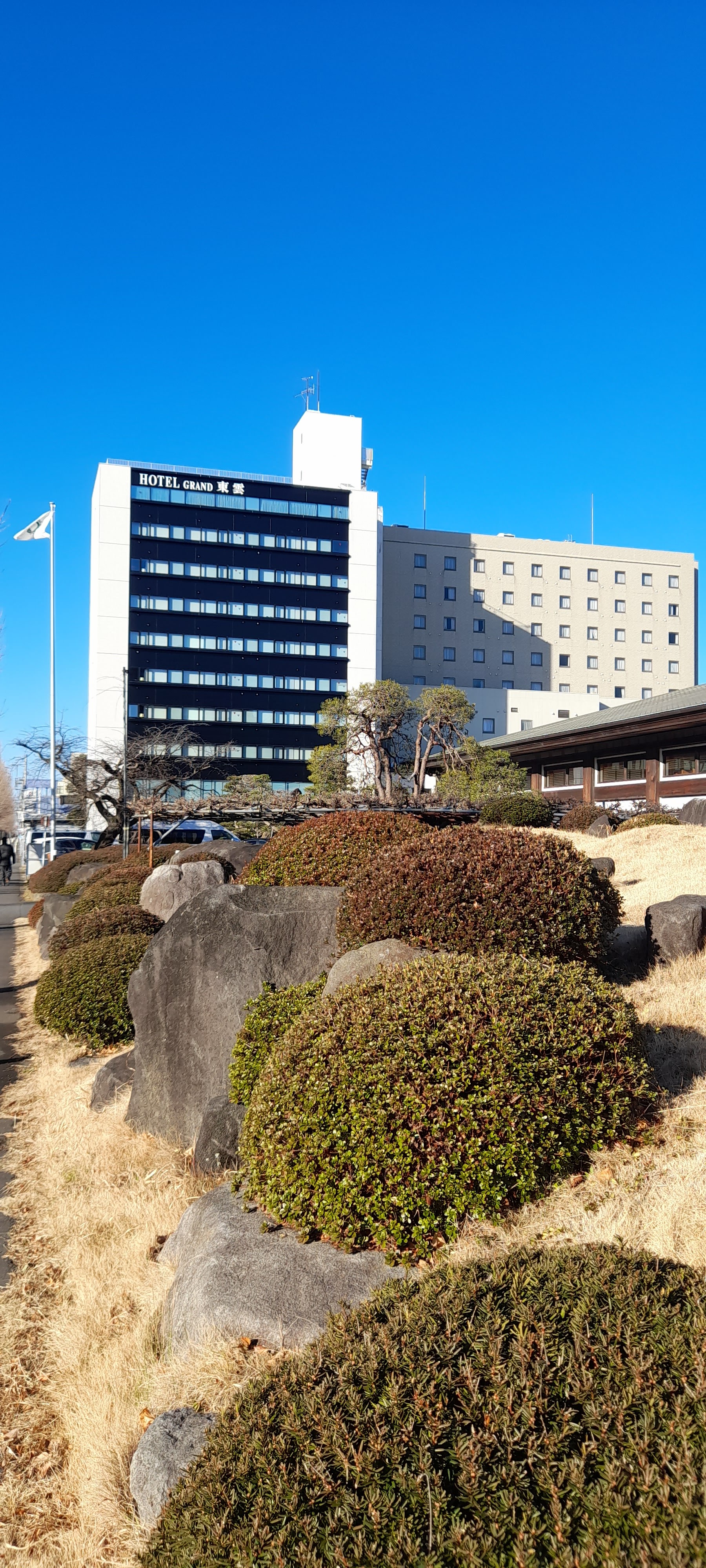
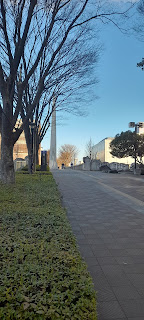
Here are some photos of the green infrastructure I spotted during the ICFM9 conference in Japan.
Green parks


Green walkways



Green walls


There is even a weather stations in the park in Roppongi, on the roof of the mall:

Here are some photos of the green infrastructure I spotted during the ICFM9 conference in Japan.
Green parks
Green walkways
Green walls
There is even a weather stations in the park in Roppongi, on the roof of the mall:
Today I presented at the ICFM9 in Tsukuba, Japan. Aside from our extended abstract, I also introduced the LILa - Green Infrastructure where we will gather more data on energy and water tradeoffs of green roofs and walls.


I was also very happy and proud to see my former PhD supervisor, Professor Kuniyoshi Takeuchi, get a lifetime achievement award for his contributions to flood risk management. I highly recommend his new book, Integrated Flood Risk Management, basic concepts and the Japanese Experience, for showing how to apply the concepts of disaster risk management to flood hazards in Japan. It is an amalgamation of our studies in Japan at ICHARM.

Overall it was too short! I would like to return soon for more research discussions on how to implement solutions on urban scales to help reduce the impacts of climate change, and see what the different challenges are in different countries.
6-11 February is the Dutch week of the circular economy. This is related to our LILa-GI as we attempt to make our design as circular as possible. Did you know that life cycle assessments of green roofs show using recycled material leads to less emissions over the life time of green roofs? More results on this to follow at our workshop in April.
Our collaborative abstract for the Ecocity World Summit 2023 conference is titled "A review of life cycle
assessment (LCA) studies on green roofs and walls".
Green infrastructure (GI) is often presented as a promising measure to help reduce climate change pressures in dense urban areas. This benefit, combined with the fact that GI involves increased biodiversity leads to it being seen as a sustainable measure. However, few studies quantify GI’s water and energy impacts, thereby obscuring how environmentally friendly such infrastructure can be. To elucidate the known results so far regarding the environmental impacts related to energy and water use, such as climate change or freshwater scarcity, a systematic review was performed.
Scopus was used to gather studies for an in-depth analysis of life cycle assessment (LCA) studies with a focus on green roofs and walls and energy and water use related impacts. Project details were analyzed when available, specifically for the precise types of green infrastructure applied, the local climate circumstances, the applied construction materials and plant species, the building type and specifics, and the intended climate change adaptation benefits. The characteristics of the LCA studies analyzed include the type of software and databases used, the system boundaries and functional unit applied, the cut-off criteria, water and energy related environmental impact categories, main conclusions, and research gaps.
The analysis of the results can be used as concrete recommendation for designing and constructing a long-term monitoring setup of green roofs and green walls at the University Twente, the Netherlands, as part of the Living Innovation Lab (LILa), with respect to the question of what is the most environmentally friendly way to design green roofs and green walls.
This abstract is submitted by University Twente researchers Karina Vink, Joao Santos, Markus Berger, Peter Chemweno, and Vrije Universiteit Amsterdam researcher Nicolien van der Grijp.
There are many locations of Green Infrastructure to visit in Enschede. Here are two movies from the stream restoration project in Stadsveld. The stream has been restored both through existing streets and at a local elementary school.
The municipality approached the school about their plans to restore the city stream alongside the school. They asked "can we use your schoolyard as a water buffer? If there is a lot of rain in a short time, we can collect the water in your school yard." The school thought that water and children are a beautiful combination. The schoolyard had been outdated for years, and they saw this as a great opportunity to immediately redevelop the entire schoolyard. They have had a lot of contact with the people of the municipality, including the water engineers and designers. They looked at what the municipality could contribute to this project, especially financially. They then discovered that the province of Overijssel was planning to make all schoolyards green. And that as a school you could apply for a subsidy of 10,000 euros. The municipality then helped the school plan everything. Additional funding came from Jantje Beton, an organization for youth facilities, and the ABN Amro Foundation, a bank. The school also involved children in making the plan. There were classes explaining what the Stadsbeek is and why it is important that it is there. Children also chose new playground equipment. In the design it is ensured that the depth of the retention area poses no danger to the safety of the children. Now there are classes outside and children play outside much more often.
Exploring the multi-functional roof sector in the Netherland - Daan Jongbloed, VU Amsterdam
Final Presentation Thesis (Dutch)
This study looked mainly at multi-functional roofs, such as green roofs with solar panels or a recreation function. A limited amount of sources were available as many companies had no time in their schedule to respond. The main conclusions were that the materials used in constructing multi-functional roofs are already quite circular, and that the biggest improvements can be made in construction methods and reducing financial costs.
It remains unclear to which degree the entire life cycle of materials is taken into account, which is one of the reasons the LILa-GI is researching just that.
What is the LILa?
The Living Innovation Lab (LILa) is a joint initiative of the faculty of
Engineering Technology (ET) and Geo-Information Science and Earth
Observation (ITC) at University Twente, the Netherlands. Its goals:
- provide a semi-controlled setting for observation, monitoring, and experimentation
- support training and education for vocational schools, university students, and practitioners
- connect with local communities and industrial partners
Green Infrastructure is just one among over a dozen of research projects taking place. Click here for more information on the other research projects at this site.
Green Infrastructure
In the initial stage, three different types of green roofs are in
development, along with three different types of green walls. The green
roofs include
extensive and intensive green roofs, and blue-green roofs. The green
walls consist of free climbing soil bound plants, scaffolding climbing
plants, and
wall forming modular vegetation. Both green roofs and green walls are
compared to a section of building without green infrastructure, to
assess
performance comparatively. A later stage includes the transformation of
parking places to have permeable pavement and underground water storage
adjacent to the LILa site.
Climate Change
Green Infrastructure can help to reduce the imapacts of climate change
in two ways. One way is adaptation, to change our environment and
increase resilience.
An example of this is planting trees that increasee shade in hot summer
months. The second way is mitigation, to reduce the levels of green
house gases in
the atmosphere. An example of this is that trees use CO2 to grow and
thereby remove some from the air.
Most importantly, building green infrastructure can only be truly
sustainable and thereby not add to greenhouse gases or other excessive
consumption by
paying attention to the entire life cycle, from production to the end of
life, of the materials involved.
What are the research questions?
Two main research questions are answered through LILa - GI. The first concerns the quantified energy and water tradeoffs of GI.
To answer this we aim to quantify the potential climate resilience benefits:
- reduced urban floods and runoff peaks
- reduced heating/cooling
- carbon sequestration
and quantify the potential tradeoffs:
- CO2 emissions during production, maintenance (for irrigation and pumping), and end of life
- required irrigation and stored precipitation
all through continuous monitoring and modeling.
The second research question is how a supposedly sustainable measure as
GI can be constructed in a most sustainable way, that is to say,
not just be sustainable during its use phase, but also during material
selection, construction, and end-of-life. To answer this, both
Life Cycle Analysis modeling and intense cooperation with designers and
construction companies are implemented.
Do you want to visit the LILa - GI site with a small group? Send an email expressing your interest.
Location at University Twente
You can visit the LILa at University Twente. It is located at the road
De Achterhorst, between buildings 31 (Windpark) and 32 (BMC) on the
campusmap.
Public transportation and access routes can be found in this campusmap.
Current impression
The LILa site is still in the development phase. At the moment you can
see poles and signs where the various studies are planned to be
constructed.


These months we had some extremes in terms of drought but also in terms of short intense rainfall, and it remains rather obvious visually wh...


